
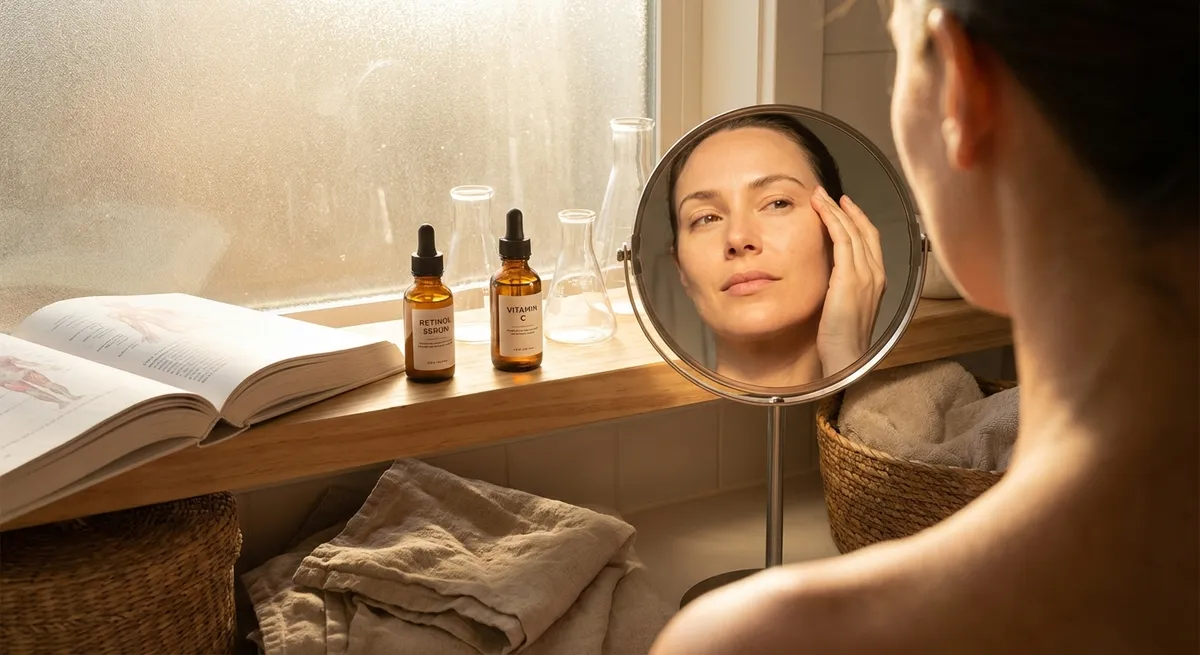
Aging is inevitable, but how your skin ages is surprisingly flexible. With the right ingredients, habits, and routine, you can soften fine lines, boost firmness, even tone, and keep your skin resilient for decades. This guide breaks down the most effective, research-backed anti-aging strategies—no hype, just what actually works—and shows you how to build a routine step by step.
How Skin Actually Ages (And What You Can Influence)
Your skin doesn’t just “get old”; it changes in specific, measurable ways:
- Collagen and elastin decline: These proteins keep skin firm and bouncy. Production slows in your 20s and drops more steeply after 30–35.
- Cell turnover slows: Dead cells hang around longer, making skin look dull and uneven, and accentuating fine lines.
- Barrier function weakens: The skin’s outer layer loses lipids and moisture, leading to dryness, sensitivity, and a rough texture.
- Pigment becomes uneven: Sun exposure and inflammation create dark spots, redness, and blotchiness over time.
- Environmental damage accumulates: UV radiation, pollution, and smoking generate free radicals that damage DNA, proteins, and lipids in the skin.
You can’t stop intrinsic (genetic) aging, but you can dramatically influence:
- How much collagen you preserve
- How even and smooth your skin looks
- How strong and hydrated your barrier remains
- How much photoaging (sun-driven aging) you accumulate
That’s where targeted skincare—and a disciplined routine—comes in.
The Non-Negotiable: Daily Sunscreen for Real Anti-Aging
If you only change one thing, make it this: use a broad-spectrum sunscreen every single morning, all year, on all exposed skin.
Up to 80–90% of visible facial aging is driven by UV exposure. Protecting against that is more powerful than any serum.
What to look for
- Broad-spectrum (protects against UVA + UVB)
- SPF 30 or higher (SPF 50 is ideal if you’re outdoors a lot)
- Texture you’ll actually wear daily
Types:
- Mineral (physical): Zinc oxide and/or titanium dioxide
- Better for sensitive or redness-prone skin
- Examples:
- EltaMD UV Clear SPF 46 (mineral-dominant, lightweight, great for acne-prone)
- La Roche-Posay Anthelios Mineral SPF 50 (good for sensitive skin)
- Chemical: Avobenzone, octisalate, octocrylene, and modern filters like Tinosorb (in many non-US sunscreens)
- Usually more elegant under makeup, less white cast
- Examples:
- La Roche-Posay Anthelios Melt-in Milk SPF 60
- Supergoop! Unseen Sunscreen SPF 40 (clear gel, good under makeup)
How to use it correctly
- Apply ¼ teaspoon for the face alone (about two full finger-lengths).
- Apply to face, ears, neck, and the back of your hands.
- Reapply every 2 hours if you’re outdoors, sweating, or rubbing your skin.
- Use it as the last step of your morning routine (before makeup).
No anti-aging routine is complete or effective without this step.
Core Anti-Aging Ingredients (What Actually Works)
You’ll see hundreds of products marketed as “anti-aging,” but only a handful of ingredient categories have strong scientific support.
1. Retinoids (Vitamin A Derivatives)
Why they work
Retinoids are the gold standard in topical anti-aging. They:
- Increase collagen production
- Speed up cell turnover
- Improve fine lines and wrinkles
- Smooth texture and fade hyperpigmentation
Options:
- Prescription retinoids (strongest, most evidence):
- Tretinoin (Retin-A, generic)
- Tazarotene
- Adapalene 0.3% (higher strength than OTC)
- Over-the-counter retinoids (gentler, still effective over time):
- Retinol
- Retinaldehyde (often labeled “retinal”)
- Adapalene 0.1% (OTC, e.g., Differin Gel – studied mainly for acne but offers anti-aging benefits)
Product examples:
- Differin Gel 0.1% (adapalene) – great starter retinoid for normal to oily, acne-prone skin
- CeraVe Resurfacing Retinol Serum – includes niacinamide and ceramides to reduce irritation
- Avene RetrinAL 0.1 Cream – retinaldehyde-based, good balance of efficacy and gentleness
2. Vitamin C (L-Ascorbic Acid and Stable Derivatives)
Why it works
Topical vitamin C is a powerful antioxidant that:
- Neutralizes free radicals from UV and pollution
- Supports collagen synthesis
- Helps fade dark spots and brighten dull skin
Look for:
- 10–20% L-ascorbic acid (the most studied form)
- Formulated at pH ~3–3.5 for best absorption (in L-ascorbic acid serums)
- Dark or opaque bottle (to protect from light)
Product examples:
- SkinCeuticals C E Ferulic – the “reference” vitamin C serum used in many studies
- La Roche-Posay Pure Vitamin C10 Serum – 10% L-ascorbic acid, fragrance-free
- Vichy LiftActiv Vitamin C Serum – 15% vitamin C, minimal formula
If you’re sensitive, you might do better with derivatives (e.g., sodium ascorbyl phosphate, ascorbyl glucoside), which are gentler but often less potent.
3. Niacinamide
Why it works
Niacinamide (vitamin B3) is incredibly versatile:
- Strengthens the skin barrier
- Improves fine lines and texture
- Reduces redness and blotchiness
- Helps regulate oil and minimize the look of pores
- Supports brightening and evening skin tone
It’s well-tolerated by most skin types and plays nicely with almost all other actives.
Product examples:
- The Ordinary Niacinamide 10% + Zinc 1% – budget-friendly, best for oilier skin
- Paula’s Choice 10% Niacinamide Booster – lightweight, easy to mix into other products
- CeraVe PM Facial Moisturizing Lotion – includes niacinamide plus ceramides
4. AHAs and BHAs (Exfoliating Acids)
Why they work
Gentle, chemical exfoliation promotes smoother, more even skin:
- AHAs (alpha hydroxy acids): Glycolic, lactic, mandelic acids
- Improve texture, fine lines, and pigmentation
- BHAs (beta hydroxy acids): Salicylic acid
- Penetrate into pores, good for acne-prone or congested skin
Use with caution: Over-exfoliation can worsen redness, sensitivity, and accelerate barrier damage, which undermines anti-aging.
Product examples:
- Paula’s Choice 2% BHA Liquid Exfoliant – cult favorite for clogged pores and texture
- The Ordinary Lactic Acid 10% + HA – gentler AHA, good for dry or sensitive-prone skin
- Pixi Glow Tonic (5% Glycolic Acid) – mild AHA toner for experienced users
5. Peptides, Growth Factors & Supportive Ingredients
These aren’t as universally proven as retinoids or vitamin C, but they can be helpful additions:
- Peptides: May signal skin to produce more collagen and elastin
- Example: Olay Regenerist Micro-Sculpting Cream (peptides, niacinamide)
- Growth factors: Derived from human cells, plants, or synthetic sources; can support repair and firmness
- Example: SkinMedica TNS Advanced+ Serum (high-end, often recommended by dermatologists)
- Ceramides & fatty acids: Support barrier health and prevent water loss
- Example: CeraVe Moisturizing Cream, La Roche-Posay Toleriane Double Repair Moisturizer
Consider these “nice-to-have” boosters once you’ve nailed the basics.
Morning Routine: Step-by-Step Anti-Aging Protocol
Your morning routine is about protection and prevention.
Step 1: Gentle Cleanse (or Just Rinse)
- Use a low-foaming, non-stripping cleanser.
- If your skin is dry or sensitive, you may just rinse with lukewarm water.
Examples:
- CeraVe Hydrating Cleanser – great for dry to normal skin
- La Roche-Posay Toleriane Purifying Foaming Cleanser – good for normal to oily
Step 2: Targeted Antioxidant Serum (Vitamin C)
- Apply a vitamin C serum to dry skin.
- Use 4–6 drops for the face, more for neck and chest.
- Let it absorb for 1–2 minutes.
If vitamin C is too irritating, start 2–3 times a week or switch to a gentler antioxidant serum (niacinamide, resveratrol, or combination formulas).
Step 3: Optional: Hydrating or Niacinamide Serum
- Apply a hydrating serum (with hyaluronic acid, glycerin, panthenol) if you’re dry or dehydrated.
- Or use a niacinamide serum to support barrier and tone.
Give each layer a moment to sink in before the next.
Step 4: Moisturizer (As Needed)
- Choose texture based on your skin:
- Gel/gel-cream for oily or combo
- Lotion or cream for normal to dry
- Look for ceramides, cholesterol, fatty acids, and humectants.
Step 5: Sunscreen (Non-Negotiable)
- Apply broad-spectrum SPF 30–50 as the last step.
- Use enough, and don’t forget ears, neck, and hands.
- If using makeup, you can layer it on top once sunscreen sets (about 5–10 minutes).
Night Routine: Repair, Renewal, and Collagen Support
Nighttime is when you deploy your heavy-hitting actives like retinoids.
Step 1: Thorough (But Gentle) Cleanse
- If you wear makeup or sunscreen, use:
- An oil/balm cleanser first (massage, rinse), then
- A gentle water-based cleanser (optional if first cleanser rinses clean).
Avoid hot water and harsh scrubbing.
Step 2: Optional: Hydrating or Barrier Serum
- If you’re new to retinoids or using exfoliating acids, apply a soothing serum:
- Ingredients like glycerin, panthenol, centella asiatica, niacinamide.
This can cushion your skin before stronger actives.
Step 3: Retinoid (2–4 Nights Per Week to Start)
- Start 2–3 nights per week, on non-consecutive days.
- Apply a pea-sized amount for the entire face:
- Dot on forehead, cheeks, chin, nose, then spread thinly.
- Avoid the immediate eye corners and sides of the nose at first; expand as tolerance builds.
Tips to minimize irritation:
- Use the “sandwich” method: moisturizer → retinoid → moisturizer.
- Introduce slowly: every 3rd night, then every other night, then nightly if tolerated.
- Expect mild dryness or flaking initially; this usually improves in a few weeks.
On non-retinoid nights, focus on barrier repair (no strong actives).
Step 4: Moisturizer (Barrier Support)
- Night creams don’t need fancy claims; they need good barrier-supportive ingredients:
- Ceramides, cholesterol, fatty acids, squalane, shea butter, glycerin
- If very dry or irritated, consider layering a richer cream or even an occlusive (like petrolatum) in a thin layer over sensitive areas.
Weekly Add-Ons: Exfoliation, Masks, and When to Use Them
Exfoliating Acids (1–3x per week max)
- For dullness, texture, or pigmentation, use:
- An AHA (glycolic, lactic, mandelic) 1–2x/week
- A BHA (salicylic acid) 1–3x/week if you’re acne-prone
Do not combine strong exfoliation and retinoids on the same night if you’re prone to sensitivity. Most people do better alternating:
- Example week:
- Mon: Retinoid
- Tue: Barrier repair (no strong actives)
- Wed: AHA/BHA
- Thu: Barrier repair
- Fri: Retinoid
- Sat: Barrier repair
- Sun: Optional AHA/BHA or just rest
Hydrating & Soothing Masks
If your skin feels stressed, dehydrated, or tight:
- Use a hydrating mask (with hyaluronic acid, aloe, centella, panthenol) 1–2x/week.
- Avoid peel-off and heavily fragranced masks if you’re sensitive.
Tailoring Anti-Aging to Your Skin Type
If You’re Dry or Sensitive
- Prioritize barrier repair: ceramides, shea butter, squalane, glycerin, niacinamide.
- Choose a gentle retinoid and start very slow:
- Retinal or low-strength retinol before prescription tretinoin.
- Use lactic acid or mandelic acid (gentler AHAs) instead of glycolic if exfoliating.
- Avoid strong alcohol-based toners and harsh scrubs.
If You’re Oily or Acne-Prone
- Favor lightweight, non-comedogenic formulas (gel moisturizers, fluid sunscreens).
- Consider adapalene (Differin) as your retinoid—it’s excellent for acne and has anti-aging perks.
- Use BHA (salicylic acid) for pores and congestion, 1–3x/week.
- Don’t skip moisturizer; dehydration can worsen oiliness and sensitivity.
If You’re Focused on Pigmentation and Dark Spots
- Daily sunscreen is your #1 tool. Without it, pigment will keep returning.
- Use a combination of:
- Vitamin C
- Niacinamide
- Retinoid
- Consider adding targeted brighteners:
- Azelaic acid, tranexamic acid, licorice root extract, kojic acid (under dermatologist guidance).
Lifestyle Habits That Make or Break Your Results
Topicals are powerful, but long-term results depend heavily on daily habits.
Helpful Habits
- Don’t smoke: Smoking accelerates collagen breakdown and wrinkles dramatically.
- Limit unprotected sun: Seek shade, wear hats, UV-protective sunglasses, and protective clothing.
- Sleep 7–9 hours: Skin repair peaks during deep sleep.
- Eat a nutrient-rich diet:
- Colorful fruits and vegetables (antioxidants)
- Healthy fats (omega-3s from fish, walnuts, flaxseed)
- Adequate protein (for collagen and tissue repair)
- Manage stress: Chronic high cortisol can impair barrier function and worsen inflammatory skin issues.
Habits That Undermine Your Routine
- Frequent tanning beds or intentional sunbathing
- Over-exfoliating with multiple scrubs, peels, and acids
- Aggressive at-home microneedling or devices used incorrectly
- Constantly switching products before giving them time to work (most need 8–12 weeks)
When to Consider Professional Treatments
If you want more dramatic or faster improvements, dermatology treatments can complement your home routine:
- Prescription tretinoin or tazarotene: Stronger retinoids with robust data for wrinkles and photoaging.
- In-office chemical peels: Stronger than OTC, can significantly improve pigmentation and texture.
- Microneedling: Stimulates collagen when done professionally; can help with fine lines and scars.
- Laser treatments (e.g., IPL, fractional lasers): Target redness, sun spots, and deeper wrinkles.
- Neuromodulators (e.g., Botox) and fillers: For dynamic wrinkles and volume loss.
Always consult a board-certified dermatologist or qualified provider, especially if you have darker skin tones, as certain lasers and peels require expertise to avoid pigment complications.
Conclusion
Anti-aging isn’t about chasing youth; it’s about building resilient, healthy skin that looks and feels its best at every stage of life. The most effective routines are surprisingly simple:
- Protect with daily sunscreen
- Repair and renew with retinoids and antioxidants
- Support your barrier with thoughtful moisturizing and gentle care
- Layer in acids and advanced actives strategically, not aggressively
Consistency over months and years, more than any trendy product, is what transforms your skin. Start with one or two changes, listen to your skin, and build from there. Your future self will thank you every time you look in the mirror.
Sources
- American Academy of Dermatology – How to create an anti-aging skin care plan – Overview of dermatologist-recommended anti-aging strategies
- Harvard Health – Benefits and side effects of retinoids – Explains how retinoids work and what to expect when using them
- Skin Cancer Foundation – The importance of sunscreen – Evidence-based guidance on sunscreen use and photoaging prevention
- Cleveland Clinic – Niacinamide for skin – Breaks down niacinamide’s benefits for aging, redness, and barrier support
- Mayo Clinic – Chemical peels and anti-aging – Discusses how professional peels improve wrinkles, pigmentation, and texture
Key Takeaway
The most important thing to remember from this article is that this information can change how you think about Anti-Aging.