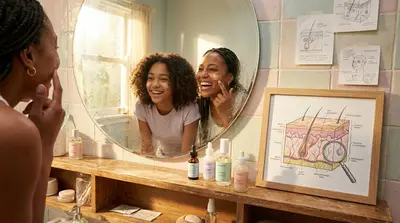
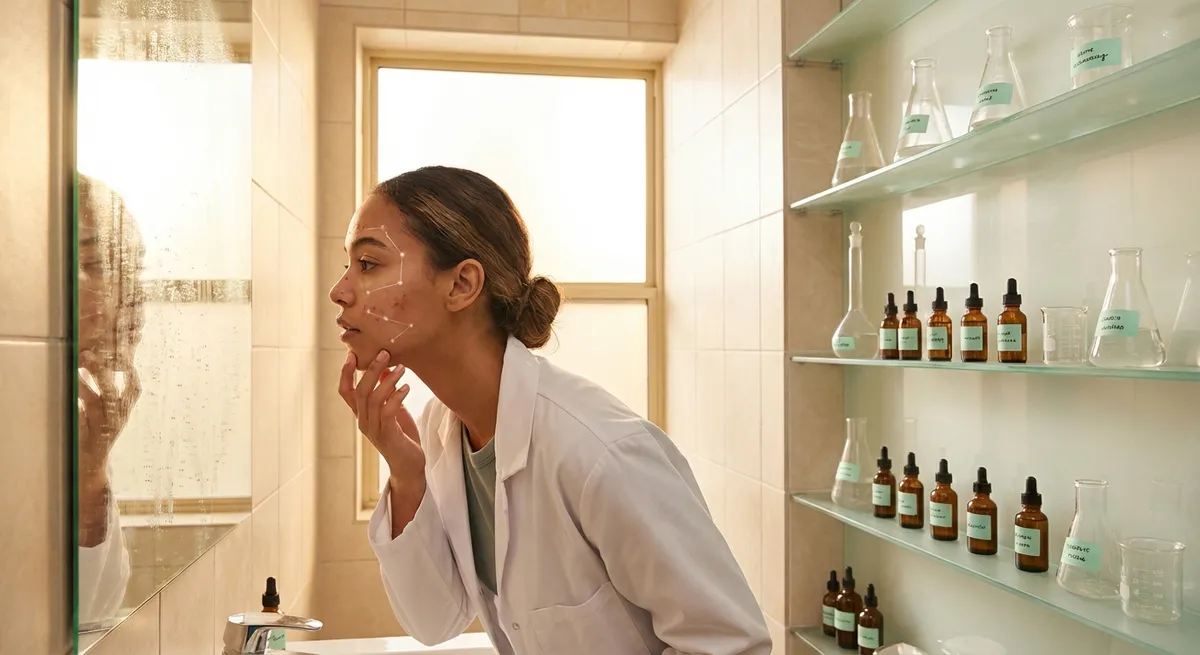
Acne and blemishes aren’t a “teen problem,” a hygiene issue, or something you just have to “grow out of.” They’re a visible sign of complex biology: hormones, genetics, inflammation, barrier health, and even stress all collide on the surface of your skin. The good news? When you understand the science, treating breakouts becomes less about guessing and more about strategy. This playbook breaks down what’s actually happening in your pores, which ingredients pull real weight, and how to build a routine that steadily reduces breakouts without wrecking your skin barrier.
What’s Really Going On Inside a Pore
To change your skin, you need to understand the system you’re working with. Acne is fundamentally a disorder of the pilosebaceous unit (hair follicle + oil gland), driven by several overlapping processes:
Excess sebum (oil) production
Hormones—especially androgens like testosterone—increase sebum production. Some people simply have more active oil glands or oil with a composition that clogs more easily.
Sticky, overactive skin cell turnover
Inside the pore, dead skin cells are supposed to shed and exit. In acne-prone skin, these cells become “stickier” (hyperkeratinization), clumping with oil to form a plug (microcomedone). This is the earliest lesion of acne—before you even see it.
Bacteria and biofilms
Cutibacterium acnes (formerly Propionibacterium acnes) is a normal resident on everyone’s skin. In clogged pores, it thrives in the oxygen-poor, oily environment and can form biofilms (protective communities) that make lesions more persistent and inflamed.
Inflammation at every stage
Acne is now widely understood as an inflammatory disease. Even so-called “non-inflamed” comedones (blackheads, whiteheads) involve subtle inflammation below the surface. Your immune system’s response shapes how red, swollen, or cystic a lesion becomes.
Hormones, stress, and lifestyle
- Fluctuating hormones (menstrual cycle, PCOS, puberty, perimenopause) can worsen oil production and inflammatory signaling. - Stress triggers cortisol and adrenergic hormones, which can increase sebum and impair barrier repair. - Diet isn’t the sole cause, but high glycemic load diets and possibly certain dairy patterns can nudge acne in some people.
When you see acne this way, harsh scrubs and stripping cleansers don’t make sense; they disrupt the barrier and provoke more inflammation. Effective care targets several of these mechanisms at once, while keeping your barrier intact.
Ingredient Deep Dive: What Actually Works on Acne
There is no single “magic” acne ingredient. The most successful routines layer 2–4 complementary actives, used consistently and at tolerable strengths. Below is a science-backed breakdown.
1. Salicylic Acid (BHA)
What it does:
- Oil-soluble acid that penetrates into pores
- Exfoliates inside the follicle (keratolytic)
- Helps dissolve clogged sebum and dead cells
- Has mild anti-inflammatory and antimicrobial properties
- Blackheads, whiteheads, congested pores, mild inflammatory acne
- Oily or combination skin
- Leave-on formulas (toners, serums) at 0.5–2% are most effective
- Start 2–3x/week, then increase to daily if skin tolerates
- Avoid pairing with strong scrubs or harsh foaming cleansers to reduce irritation
Best for:
How to use it:
2. Benzoyl Peroxide (BPO)
What it does:
- Kills C. acnes by releasing oxygen free radicals inside the pore
- Reduces inflammatory lesions (papules, pustules)
- Decreases antibiotic resistance when used with prescription topical antibiotics
- Red, inflamed breakouts, pustules, and some nodules
- Body acne (back, chest, shoulders)
- Can be drying and irritating; lower strengths (2.5–5%) often work as well as 10% with fewer side effects
- Bleaches fabric (towels, pillowcases, clothing)
- Avoid layering immediately with retinoids when you’re just starting—alternate nights until your skin adjusts
Best for:
Key considerations:
3. Retinoids (Retinol, Adapalene, Tretinoin, etc.)
What they do:
- Normalize cell turnover inside the follicle, preventing microcomedones
- Help clear existing comedones and reduce new ones
- Long-term benefits: smoother texture, reduced post-acne marks, improved fine lines
- Over-the-counter:
- Retinol (various strengths)
- Adapalene 0.1% (in many countries, e.g., Differin in the U.S.)
- Prescription:
- Tretinoin, tazarotene, higher-strength adapalene, trifarotene
- Comedonal acne (clogged pores), mixed acne, persistent breakouts
- Long-term maintenance once active acne is controlled
- Start 2–3x/week at night, pea-sized amount for entire face
- Apply over a hydrating layer (“sandwich method”: moisturizer → retinoid → moisturizer) if sensitive
- Expect an adjustment period: mild dryness or purging (old clogs surfacing) in first 4–8 weeks
Types:
Best for:
How to use them:
4. Niacinamide
What it does:
- Anti-inflammatory, helps calm redness
- Supports barrier function and reduces transepidermal water loss (TEWL)
- Can help regulate sebum production modestly
- May improve post-inflammatory hyperpigmentation (PIH) over time
- Sensitive, acne-prone skin needing barrier support
- Redness, lingering marks, oily but dehydrated skin
- 2–5% is typically ideal; extremely high percentages (10%+) can be more irritating without more benefit for many people
- Pairs well with almost every other active (BHA, BPO, retinoids, azelaic acid)
Best for:
Usage tips:
5. Azelaic Acid
What it does:
- Anti-inflammatory and antimicrobial
- Helps reduce comedones and inflammatory lesions
- Especially powerful for treating PIH and redness
- May help in those with both acne and rosacea tendencies
- Acne with dark marks or uneven tone
- Sensitive or redness-prone skin that can’t handle strong acids
- OTC products often in the 5–10% range
- Prescription strengths up to 15–20% for stronger effect
Best for:
Formulations:
6. Supportive but Overlooked Allies
- Zinc (topical or oral): Mild anti-inflammatory and antimicrobial effects. Oral zinc can help mild to moderate acne in some people but should not exceed recommended doses without medical supervision.
- Ceramides, cholesterol, fatty acids: These barrier lipids don’t treat acne directly but are critical to tolerating acne actives without chronic irritation.
- Non-comedogenic emollients like squalane or light esters: Keep skin supple so that actives can do their job without causing flaking and micro-cracks in the barrier.
Building a Smart Routine: Morning & Night, Step by Step
An acne routine doesn’t have to be maximalist to be effective. The real secret: consistency, gentle support for your barrier, and strategic placement of actives. Below is a general framework you can adapt.
Morning Routine
1. Cleanse (optional depending on your skin)
- If you’re oily or used heavy products overnight, use a gentle, low-foam cleanser labeled “non-comedogenic” or “for acne-prone skin.”
- Very dry or sensitized skin may do better just rinsing with lukewarm water in the morning.
2. Targeted Treatment (if not too drying)
Choose 0–1 of the below based on your skin’s tolerance and what you’re using at night:
- Salicylic acid toner/serum (0.5–2%)
- Apply after cleansing, avoiding eye area.
- Good if you’re not using a strong leave-on acid at night.
- Niacinamide serum (2–5%)
- For all-day calming and oil-balance support.
- Safe to use even if your main acne actives are at night.
- Azelaic acid (5–10% OTC, or RX strength)
- Apply as a thin layer after cleansing if tackling both active acne and pigment.
- Choose a lightweight, non-comedogenic gel-cream or lotion.
- Look for ingredients like glycerin, hyaluronic acid, panthenol, and ceramides.
- Use broad-spectrum SPF 30+ every day, even if indoors (UVA penetrates windows).
- Opt for non-comedogenic textures: gel, fluid, or lightweight lotions.
- Mineral or hybrid formulas (zinc oxide, titanium dioxide) may suit very reactive or post-procedure skin.
3. Moisturize
4. Sunscreen (non-negotiable)
Sun protection is crucial: many acne treatments increase photosensitivity, and UV exposure worsens dark marks and redness.
Night Routine
Night is your main “active treatment” window.
1. Gentle Cleanser
- Remove makeup, sunscreen, and daily buildup.
- For heavy makeup, consider a fragrance-free, non-comedogenic cleansing balm or oil as a first step, then follow with a gentle water-based cleanser (double cleanse).
2. Core Active Treatment (Choose 1–2 primary actives)
A practical progression for many:
- Phase 1 (Weeks 1–4):
- BHA (salicylic acid) 2–3x/week
- Niacinamide most nights
- No retinoid yet if you’re very sensitive
- Phase 2 (Weeks 4–8):
- Introduce a retinoid (e.g., adapalene 0.1% or low-strength retinol) 2–3x/week
- Use BHA on alternate nights or reduce frequency if irritation appears
- Add benzoyl peroxide as a spot treatment or very thin layer over acne-prone areas 2–3x/week (not on the same nights as retinoids in the beginning)
- Phase 3 (Long-term maintenance):
- Retinoid most nights you can tolerate
- BHA or BPO a few times per week, adjusted to your breakout pattern
- Azelaic acid or niacinamide for tone and barrier support
- Do not skip this—even oily skin needs hydration.
- If your skin is easily irritated, apply moisturizer before your retinoid (the “buffering” or “sandwich” approach).
- Look for: ceramides, glycerin, hyaluronic acid, panthenol, and minimal fragrance.
3. Moisturizer (Barrier Insurance)
Product Strategy: How to Choose Without Getting Overwhelmed
You don’t need a 10-step routine or luxury price tags. What matters: proven actives in well-formulated, tolerable products. When scanning labels and reviews, focus on:
Evidence-based actives in realistic concentrations
- BHA: 0.5–2% - Niacinamide: 2–5% (10% only if you already know you tolerate it) - Benzoyl Peroxide: 2.5–5% for most faces - Retinoids: Start with low-strength retinol or adapalene 0.1% OTC; escalate with professional guidance if needed - Azelaic Acid: 5–10% OTC, 15–20% with prescription
Formulations that respect your barrier
- Avoid daily use of gritty scrubs, astringent alcohol-heavy toners, or multiple overlapping strong acids. - Fragrance is not automatically “bad,” but if your skin is reactive, fragrance-free options are safer.
Textural match for your skin type
- Oily: gels, light lotions, fluid SPFs - Combination: light creams or gel-creams, targeted BHA only on T-zone - Dry but acne-prone: creamy cleansers, richer moisturizers with ceramides, lower frequency of drying actives
Simplicity over quantity
A very effective routine for many acne-prone people might be: - AM: gentle cleanse (optional), niacinamide serum, moisturizer, sunscreen - PM: cleanse, retinoid (or BHA/BPO on some nights), moisturizer
When to See a Dermatologist (And What They Can Offer)
At-home routines are powerful for mild to moderate acne, but they’re not always enough. Consider seeing a dermatologist if:
- You have deep, painful nodules or cysts
- Acne is leaving pitted or raised scars
- Your breakouts are rapidly worsening despite 2–3 months of consistent OTC care
- You suspect a hormonal driver (irregular periods, excess facial/body hair, jawline cystic acne, PCOS history)
Dermatologists can add:
- Topical prescriptions: Stronger retinoids (tretinoin, tazarotene), higher-strength azelaic acid, topical antibiotics (usually combined with BPO to prevent resistance)
- Oral medications:
- Antibiotics for short-term use in inflammatory acne
- Hormonal therapies (e.g., certain oral contraceptives, spironolactone) for hormonally influenced acne
- Isotretinoin for severe, scarring, or treatment-resistant acne
These treatments work best alongside a supportive skincare routine that preserves your barrier and protects from UV.
Mindset Matters: Consistency Over Perfection
The most underrated acne treatment is patience. Skin operates on a 4–8 week cell turnover cycle; meaningful change often takes 8–12 weeks or longer. A few guiding principles:
- Don’t chase every new trend. Give a routine at least 8 weeks before judging it—unless you’re experiencing true irritation or allergy.
- Introduce one new active at a time. This makes it easier to identify what helps and what irritates.
- Track patterns. Photos, notes on your cycle, stress levels, or new products can reveal triggers and trends.
- Don’t punish your skin for breaking out. Over-cleansing, burning masks, and harsh scrubs usually backfire by amplifying inflammation.
Clearer skin is rarely about willpower or “being good.” It’s about understanding your biology and working with it systematically. With the right combination of ingredients, a gentle but intentional routine, and time, most people can dramatically reduce breakouts and reclaim a calmer, more predictable complexion.
Sources
- American Academy of Dermatology – Acne: Diagnosis and Treatment – Overview of acne types, causes, and evidence-based treatment options from board-certified dermatologists.
- Mayo Clinic – Acne: Symptoms and Causes – Explains the underlying mechanisms of acne, risk factors, and when to seek medical care.
- National Institutes of Health (NIH) – Pathogenesis and Treatment of Acne Vulgaris – Peer-reviewed review article detailing the biology of acne and mechanisms of common therapies.
- Cleveland Clinic – Retinoids for Acne – Clear explanation of how topical retinoids work, side effects, and usage tips.
- Harvard Health Publishing – Diet and Acne: Is There a Link? – Evidence-based discussion of how diet may influence acne in some individuals.
Key Takeaway
The most important thing to remember from this article is that this information can change how you think about Acne & Blemishes.