
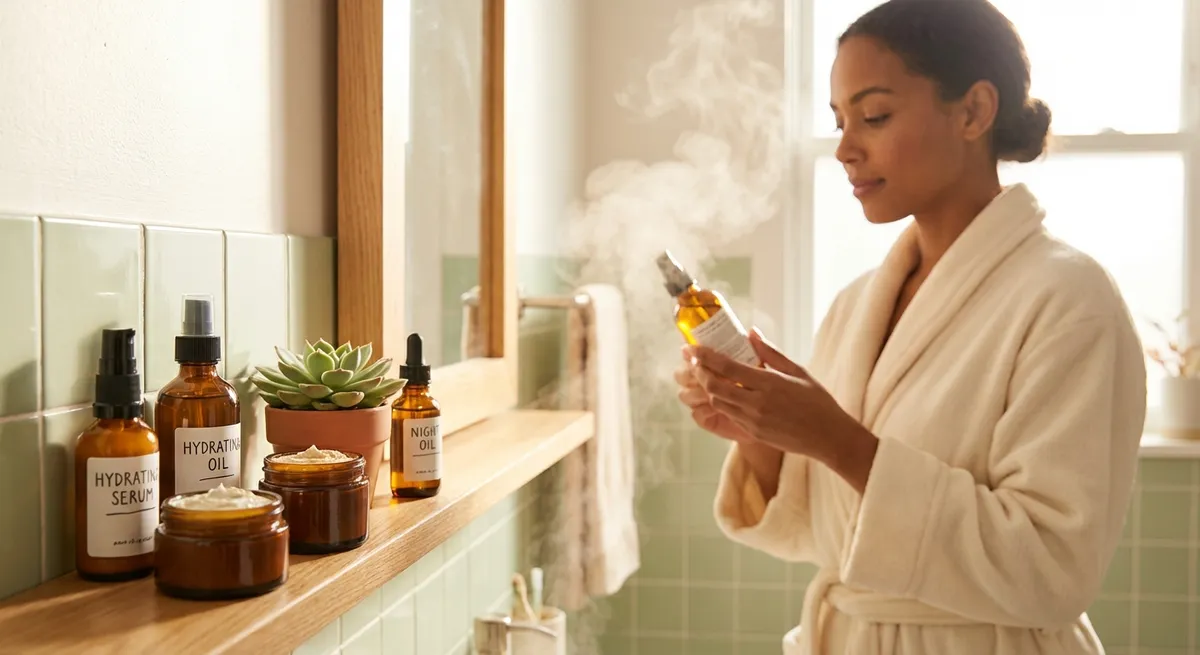
Healthy skin isn’t about buying the most expensive serum or copying a celebrity’s 12-step routine. It’s about understanding what your skin actually needs—and using evidence-backed ingredients in a smart, consistent way.
This guide breaks down skincare routines by skin type, walks through morning and evening steps, explains key ingredients, and offers realistic product suggestions at different price points. Think of this as your blueprint for building a routine that actually works.
Start Here: Know Your Skin Type and Main Goals
Before buying anything, you need two things: your skin type and your primary concerns.
Common skin types
Most people fall into one of these categories (often a combination):
- Normal: Not overly oily or dry, minimal sensitivity or breakouts
- Oily: Shiny by midday, enlarged pores, frequent blackheads/whiteheads
- Dry: Feels tight, dull, rough or flaky, especially after cleansing
- Combination: Oily T‑zone (forehead, nose, chin) with normal/dry cheeks
- Sensitive: Easily stings, burns, or turns red with products or weather changes
- If you wash your face, leave it bare for 1 hour, then look in the mirror:
- Shiny all over → Likely oily
- Tight or flaky → Likely dry
- Shiny only on forehead/nose/chin → Likely combination
- Reacts easily/gets red/itchy → Likely sensitive component
A quick check:
Define 1–2 core goals
You’ll build your routine around these:
- Acne or clogged pores
- Dark spots/hyperpigmentation or uneven tone
- Redness or rosacea-prone skin
- Fine lines, loss of firmness, dullness
- Dehydrated skin (lacking water), even if oily
Focusing on just 1–2 goals keeps your routine effective and prevents irritation from ingredient overload.
The Essential Routine Framework: AM vs PM
You do not need 10 steps. You do need consistency. Here’s the science-backed framework:
Morning (AM) Basics
Cleanser (optional for very dry/sensitive skin)
Treatment/serum (antioxidants like vitamin C, niacinamide, or hydrating serums)
Moisturizer
Sunscreen (SPF 30+) – non-negotiable
Night (PM) Basics
Cleanser (double cleanse if wearing heavy sunscreen/makeup)
Treatment (retinoid, exfoliating acid on limited nights, or soothing serum)
Moisturizer (or richer cream if needed)
Start simple. You can layer in acids, masks, and extras after your skin tolerates the basics.
Step 1: Cleansing—Gentle Wins, Always
Over-cleansing is one of the fastest ways to damage your skin barrier. The goal is to remove oil, sweat, and pollutants without stripping your skin.
What science says
- Harsh surfactants (like strong sulfates) can disrupt the skin barrier, leading to irritation and dryness.
- Mild, pH-balanced cleansers help maintain the moisture barrier and microbiome.
How to cleanse (by skin type)
- Oily/acne-prone:
- Use a gentle foaming or gel cleanser, ideally pH-balanced.
- Look for ingredients like salicylic acid if you’re breakout-prone.
- Dry/sensitive:
- Use a cream or lotion cleanser.
- Avoid strong fragrance and high-foaming formulas.
- AM cleansing can be just lukewarm water or a very gentle cleanser.
- Combination:
- Gentle gel cleanser for all; you don’t need two different products.
Product examples (not sponsored, just representative)
- Budget:
- CeraVe Hydrating Facial Cleanser (normal–dry)
- CeraVe Foaming Facial Cleanser (normal–oily)
- Mid-range:
- La Roche-Posay Toleriane Hydrating Gentle Cleanser
- If wearing heavy sunscreen/makeup:
- Use a cleansing balm or oil first, then your regular cleanser (double cleansing).
Step 2: Treatments That Actually Work (Serums & Actives)
This is where you target concerns like acne, dark spots, or fine lines. Start low and slow—more actives do not equal better skin.
Morning heroes
Vitamin C (L‑ascorbic acid and derivatives)
- Benefits: Antioxidant protection, helps boost collagen, can brighten dark spots.
- Science: Multiple trials show topical vitamin C improves photodamage and pigmentation when used consistently.
- Use: AM, under sunscreen, a few times per week to daily if tolerated.
If pure L‑ascorbic acid is too irritating, look for gentler derivatives (e.g., sodium ascorbyl phosphate, magnesium ascorbyl phosphate).
Niacinamide
- Benefits: Regulates oil, reduces redness, improves barrier function, helps with hyperpigmentation.
- Science: Studies support 2–5% niacinamide for improving fine lines, blotchiness, and hyperpigmentation.
- Use: AM or PM, usually very well tolerated, great for almost all skin types.
Hydrating serums (Hyaluronic acid, glycerin, panthenol)
- Draw water into the skin and support barrier health.
- Use on slightly damp skin, then seal with moisturizer to avoid dehydration.
Nighttime heroes
Retinoids (Retinol, retinaldehyde, adapalene, tretinoin)
- Benefits: Gold standard for anti-aging and acne. Increases cell turnover, boosts collagen, helps fade dark spots and smooth texture.
- Science: Decades of clinical data support retinoids as one of the most effective topical treatments for photoaging and acne.
- Use rules:
- Start 1–2 nights per week, increase slowly.
- Pea-sized amount for full face.
- Always use sunscreen in the morning—retinoids make skin more sun-sensitive.
- Adapalene 0.1% gel (e.g., Differin) – great for acne.
- 0.1–0.3% retinol in a hydrating base for anti-aging beginners.
Over-the-counter picks:
Chemical exfoliants (AHA/BHA)
- AHAs (glycolic, lactic, mandelic): Surface exfoliation; good for dullness, fine lines, uneven tone.
- BHAs (salicylic acid): Oil-soluble; great for clogged pores and blackheads.
- Rules:
- Use 1–3x per week, not daily when starting.
- Do not layer with retinoids on the same night initially to reduce irritation.
If you’re using retinoids and acids, introduce one category at a time, several weeks apart.
Step 3: Moisturizers—Barrier First, Glow Second
Your skin barrier is your defense system. A damaged barrier = irritation, redness, breakouts, and sensitivity. Moisturizers support this barrier.
Understand the components
Most moisturizers include a combo of:
- Humectants: Attract water (e.g., glycerin, hyaluronic acid, urea).
- Emollients: Smooth and soften (e.g., squalane, ceramides, fatty acids).
- Occlusives: Lock in moisture and reduce water loss (e.g., petrolatum, dimethicone).
What to choose (by skin type)
- Oily/acne-prone:
- Lightweight gel-cream, “non-comedogenic” label, niacinamide is a plus.
- Dry/dehydrated:
- Cream with ceramides, cholesterol, fatty acids, possibly a touch of occlusives.
- Sensitive/rosacea-prone:
- Fragrance-free, minimal ingredient list, ceramides + niacinamide, avoid essential oils.
Examples
- Budget:
- CeraVe Moisturizing Cream (dry/sensitive)
- CeraVe PM Facial Moisturizing Lotion (normal–oily, niacinamide)
- Mid-range:
- La Roche-Posay Toleriane Double Repair Face Moisturizer
- Neutrogena Hydro Boost Water Gel (oily/dehydrated, but avoid if sensitive to fragrance or certain polymers)
Step 4: Sunscreen—Your Non-Negotiable Daily Step
If you only pick one skincare product to use daily, it should be sunscreen.
Why SPF is your best anti-aging + anti-hyperpigmentation product
- UV radiation accelerates collagen breakdown, causes dark spots, and triggers skin cancers.
- Daily sunscreen use has been shown to prevent signs of photoaging and reduce skin cancer risk.
What to look for
- SPF 30 or higher
- Broad-spectrum (UVA + UVB protection)
- Apply ~2 fingers’ length of product for face and neck
- Reapply every 2 hours when outdoors or after sweating/swimming
Filters: Mineral vs chemical
- Mineral (zinc oxide, titanium dioxide):
- Often better tolerated by sensitive skin.
- Can leave a white cast on deeper skin tones (improving with newer formulas).
- Chemical (e.g., avobenzone, octisalate):
- Often more elegant, easier to blend, better cosmetic finish.
- Some people find them sting around eyes or cause irritation.
Examples
- La Roche-Posay Anthelios Melt-in Milk SPF 60
- Neutrogena Ultra Sheer Dry-Touch SPF 55
- EltaMD UV Clear SPF 46 (popular for acne-prone/sensitive, contains niacinamide)
Sample Routines by Skin Type (AM & PM)
Use these as templates and adjust based on your skin’s tolerance.
1. Oily / Acne-Prone Skin
Morning
Gentle foaming cleanser
Niacinamide serum (optionally combined with a light vitamin C derivative)
Oil-free gel-cream moisturizer
SPF 30+ (non-comedogenic)
Night
Gentle cleanser
2. Adapalene 0.1% (2–3 nights/week to start, then increase as tolerated) - On non-retinoid nights, you can use a BHA exfoliant 1–2x/week.
Lightweight, non-comedogenic moisturizer
2. Dry / Dehydrated Skin
Morning
Cream or milk cleanser (or rinse with lukewarm water only)
2. Hydrating serum (e.g., hyaluronic acid + glycerin)
Ceramide-rich moisturizer
SPF 30+ (cream texture, not gel)
Night
Gentle cream cleanser
Low-strength retinol 1–2x/week (if tolerated), otherwise a barrier-repair or peptide serum
Rich moisturizer; add a thin layer of occlusive (like petrolatum) on driest areas if needed
3. Combination / Normal Skin
Morning
Gentle gel cleanser
Vitamin C serum (or niacinamide if more sensitive)
Lightweight moisturizer
SPF 30+
Night
Gentle cleanser
Retinol (2–3x/week), AHA (1x/week) on separate nights
Moisturizer tailored to how your skin feels that day (gel-cream if oily, cream if dry)
4. Sensitive / Redness-Prone Skin
Focus on barrier repair first; introduce actives later if needed.
Morning
Very gentle, fragrance-free cleanser
Soothing serum (niacinamide at low %; panthenol; madecassoside; oat extract)
Barrier-repair moisturizer (ceramides, cholesterol, fatty acids)
Mineral sunscreen (zinc-based) if you tolerate mineral filters better
Night
Gentle cleanser
Soothing serum or nothing (less is more)
Rich but not greasy moisturizer
After 6–8 weeks of skin stability, you can consider testing a low-strength retinol once a week, buffering with moisturizer.
Ingredient Spotlight: What Actually Has Evidence?
Backed by strong evidence
- Retinoids – acne, photoaging, texture, some hyperpigmentation
- Niacinamide – barrier support, redness, hyperpigmentation, oil regulation
- Vitamin C (L‑ascorbic acid) – oxidation protection, pigmentation, collagen support
- AHAs/BHAs – texture, acne (especially BHA), dullness, pigmentation
- Sunscreen – prevention of photoaging, skin cancer, and hyperpigmentation
Helpful for barrier and hydration
- Ceramides
- Glycerin
- Hyaluronic acid
- Urea (at low concentrations)
- Panthenol (pro-vitamin B5)
Approach with skepticism or caution
These can be fine but are often overhyped or irritating if not used wisely:
- High concentrations of essential oils (lavender, citrus oils)
- Strong fragrances, if you’re sensitive
- “Miracle” plant extracts with little peer-reviewed data
How to Introduce New Products Safely
Your skin likes routine. Sudden change = higher chance of irritation.
- Add one new active at a time.
- Patch test on a small area (e.g., side of neck or along jawline) for a few days.
With strong actives (retinoids, acids, vitamin C):
- Start once or twice a week. - Increase frequency slowly as tolerated.
Signs you’re overdoing it
- Burning that persists more than a few minutes
- Peeling, cracking, or shiny “plastic” looking skin
- Stinging when applying even bland moisturizer
- Stop all actives.
- Use only a gentle cleanser, a barrier-repair moisturizer, and sunscreen for 1–2 weeks.
- Reintroduce actives one at a time at a lower frequency.
If this happens:
When to See a Dermatologist
Skincare products have limits. See a board-certified dermatologist if:
- You have moderate to severe acne, painful cysts, or scarring.
- You notice new or changing moles or spots.
- Your “sensitive skin” feels like constant burning, itching, or visible inflammation.
- Over-the-counter routines don’t help after 2–3 months of consistent use.
Professional treatments (like prescription retinoids, azelaic acid, hydroquinone, or procedures such as chemical peels and lasers) can address concerns that topical cosmetics alone can’t fully resolve.
Conclusion
An effective skincare routine isn’t about perfection; it’s about consistency, simplicity, and evidence-based choices.
If you remember nothing else, remember this framework:
- Morning: Protect (gentle cleanse → targeted serum → moisturizer → SPF)
- Night: Repair (cleanse → retinoid or other treatment → moisturizer)
- Always: Go slowly, listen to your skin, and protect your barrier.
Once you understand your skin type, your main goals, and the science-backed ingredients that match them, skincare becomes less confusing and much more empowering. Build your routine step-by-step, give it time, and let the data—not the hype—guide you.
Sources
- American Academy of Dermatology – Skin Care Basics – Overview of daily skincare, cleansing, moisturizing, and sun protection from board-certified dermatologists
- National Center for Biotechnology Information – Topical Retinoids in the Management of Photodamaged Skin – Clinical review of how retinoids improve photoaging and skin texture
- Journal of Clinical and Aesthetic Dermatology – Niacinamide: A B Vitamin that Improves Aging Facial Skin Appearance – Evidence on niacinamide’s benefits for wrinkles, redness, and hyperpigmentation
- Harvard Health Publishing – Benefits and Drawbacks of Facial Exfoliation – Discussion of chemical exfoliants (AHAs/BHAs), how they work, and safety considerations
- Skin Cancer Foundation – Sunscreen – Research-backed guidance on choosing and using sunscreen to prevent sun damage and skin cancer
Key Takeaway
The most important thing to remember from this article is that this information can change how you think about Skincare Routines.